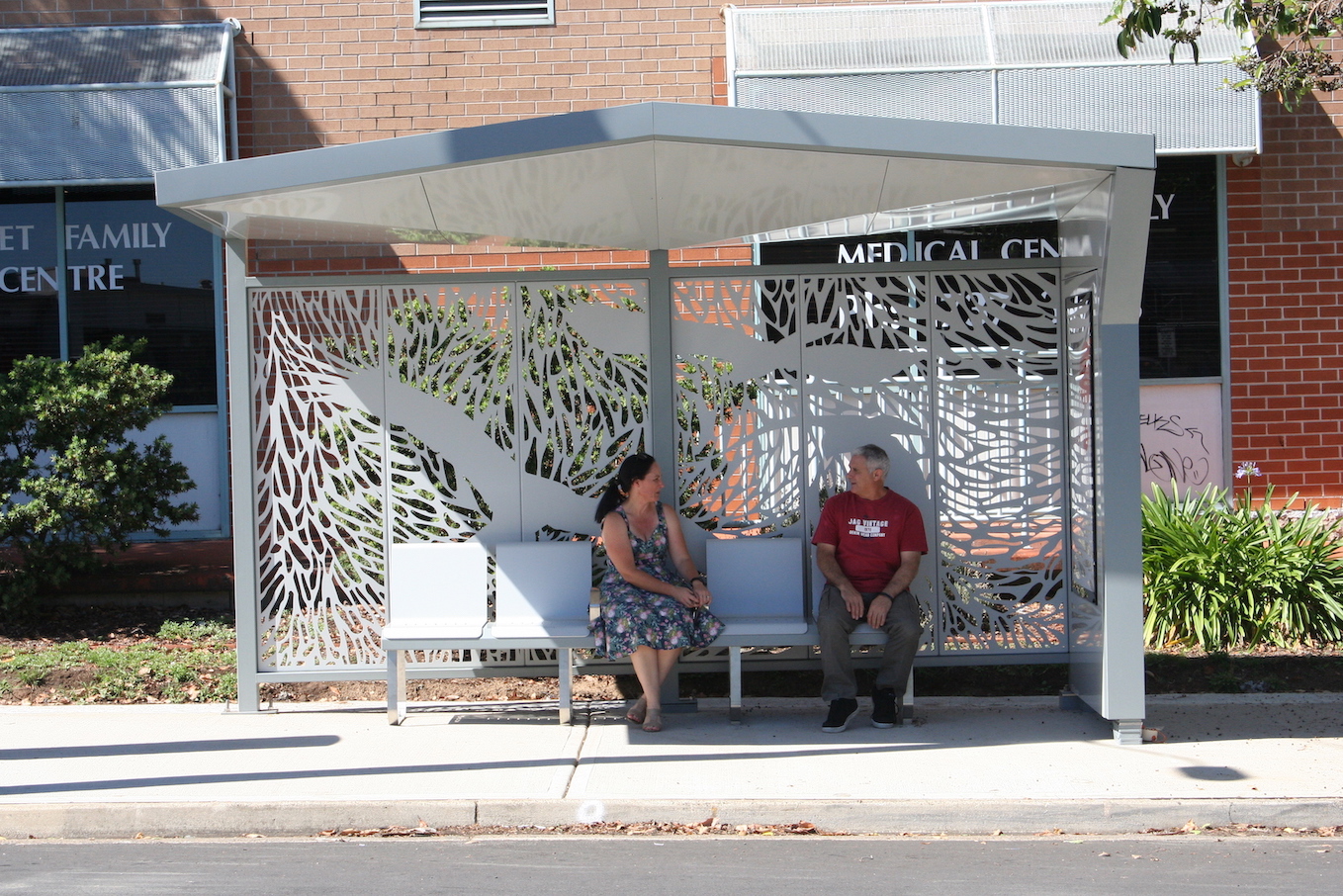
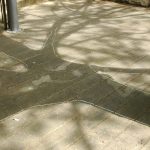
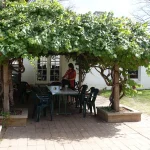
Quality shade is an important civic resource and is critical to human thermal comfort (Bloch, 2019). Shade is often, however, unevenly distributed across the city, with tree canopy roughly proportional to household wealth (Greater Sydney Commission, 2018). Shade structures are needed to provide immediate cool / protection from the sun in environments (such as linkages, nodes or even building interiors), where trees are absent or immature.
While shade needs to be considered as an integral part of the planning phase, it is identified here as a remedial pattern as there are many existing hot environments, particularly away from coastal settlements, where the addition of shade could vastly improve comfort, accessibility and use.
Shade can be fixed or dynamic, natural or artificial, hot or cool, permanent, temporary or worn. There are also many different qualities of shade: type, density, distance from ground and colour matter. Jacobs et al. (2018) at University of Technology Sydney for instance monitored climate adapted bus shelters and found a significant decrease in radiated heat from the ceiling of these structures, largely thanks to the insulated roof panels. Bick (2018), found blue shade sails provided the most effective shade in a study looking at the reduction of light intensity under different coloured shade sails. Shade from sails, however, was not found to be as effective as shade provided by awnings or natural tree canopy.
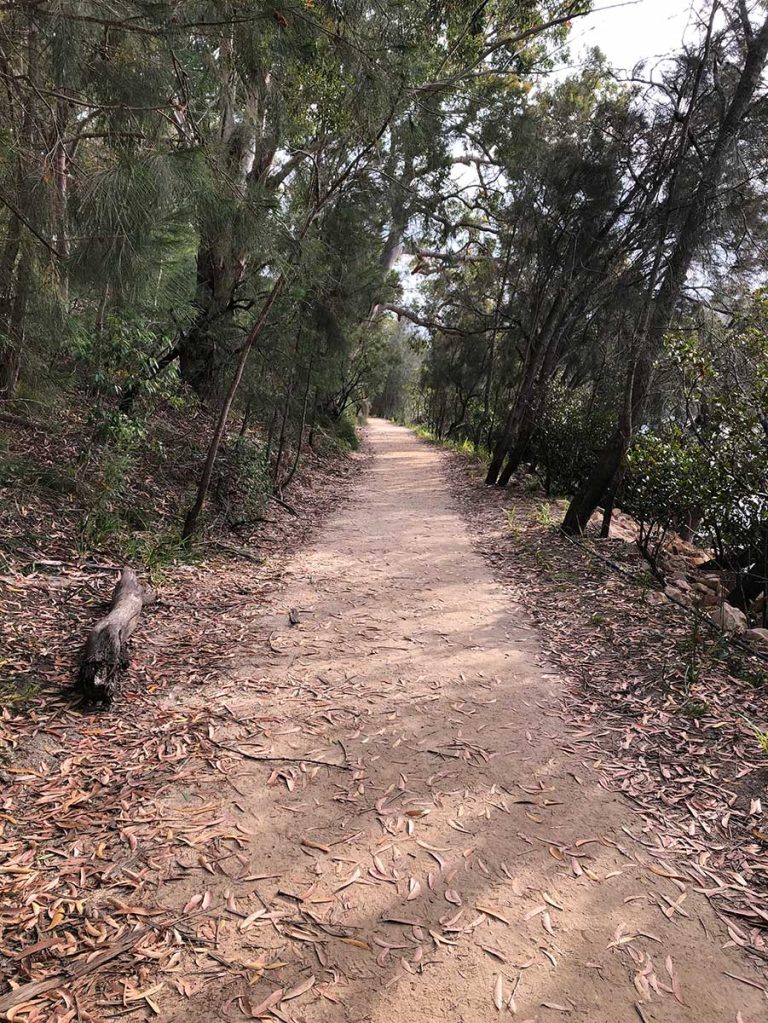
Trees provide the coolest and most amenable shade, so preserving mature trees wherever possible is a critical first step. Trees provide critical cooling infrastructure in cities and removing them, even if they are replaced, represents a loss potentially of decades of shade, amenity and habitat. In Stuttgart, tree preservation orders protect city trees that have reached a certain circumference from removal.
In areas of urban growth, however, shade needs to be factored back into environments from which trees have already been removed and ‘meanwhile shade’ will be required.