

Selecting shade trees need to be considered in accordance with the broadscale context and associated site dynamics related to the detailed qualities of individual trees.
Broadscale context: trees grown in groves, rows and shelterbelts (see the pattern ESTABLISHING SITE FORESTS) have important microflora that connect all trees through fungal hyphae in the soil. Care must therefore be taken of root systems under canopy.
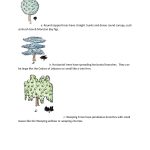
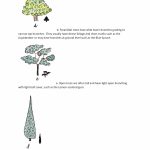
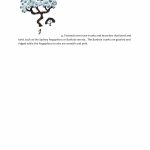
Details of individual tree species include canopy types and tree shapes. Canopy shape determines the most effective shading.
Suitable Round-topped trees
- Evergreen (native)
- Brush Box; Moreton Bay fig; Bunya pine (Araucaria Bidwillii); Tallowwood (Euc microcorys); Plum pine (Podocarpus elatus).
- Deciduous (exotic)
- Plane tree; English oak.
Suitable Horizontal Canopy Trees
- Evergreen
- River red gum (Euc camaldulensis); Spotted gum (Corymbia maculata); Mugga Ironbark (Euc sideroxylon); Lacebark (Brachychiton discolor).
- Deciduous
- Golden rain tree (Kolreuteria paniculata); Jacaranda (Jacaranda mimosifolia); Chinese Tallowwood (Sapium).
Suitable Pyramidal Tree
- Evergreen
- River She-oak (Casuarina cunninghamiana); NZ Kauri (Agathis Australis);
- Silky oak (Grevillea robusta); Turpentine (Syncarpia glomulifera)
- Deciduous
- Golden cypress (Cupressus macrocarpa); Golden Lawson cypress (Chamaecyparis Sp); Deodar Cedar (Cedrus deodara).
Suitable Open Canopy Tree
- Evergreen
- Lemon-scented gum (Corymbia citriodora); Scribbly gum (Euc haemastoma; Narrow-leafed ironbark (Euc crebra); Smooth-barked apple (Angophora costata); Cotton tree Hibiscus (Hibiscus tiliaceus);
- Narrow-leafed paperbark (Melaleuca linariifolia).
The quality of Shade depends on trees’ attributes including leaf area; high branching density; multiple canopy layers; canopy transmissivity; canopy size and projection; canopy ventilation.
Size Matters: One strategically placed large tree has more impact on an urban heat island than same quantity of smaller trees. The bigger the tree the greater the benefits (see the pattern STREET TREES & PLAZA TREES).
Siting*
Shade trees in public open space can be situated beside paths, around gathering spaces and can shade play equipment, as long as they have deep soil and have minimal intrusion into crown projection.
How much soil does a tree need? *
Small trees ( under 7 metres in height) need 36m3 ; medium trees (between 7 –15 metres) need 38m3 ; large trees (above 15 metres) need 39m3. Studies in the US and Canada indicated that most critical soil volumes fit into the 2 cubic feet/ per ft2 of crown projection, although the observation is general and not a hard and fast rule (see Grabosky, Bassuk & Trowbridge, 2002).
Dripline and Structural Root Zone For stability, tree roots must be protected within the dripline of the canopy (the Tree Protection Zone or TPZ) as well in the Structural Root Zone (SRZ) around the base of the tree.