Succession Tree Planting
As trees grow to maturity, they change the microclimate around them. Deciduous trees for instance will form a shady canopy during summer and also provide shelter from hot winds, and then let the sun through in winter (ABC 2009). Trees take time to mature into a size that can afford shade and coolth, however, and they need to be protected to mature. Furthermore, mature trees can die back or die altogether, thus other trees need to be on their way towards maturity to take their place. It is therefore imperative that senescent trees, that is, trees of advanced old age or trees in decline, that are more susceptible to disease, insect infestation and decay, are responsibly managed in urban streets and parks and that succession tree planting is planned for (City of Ryde 2016, pp. 24-26). This particularly requires the development of expertise relating to:
About this pattern
As trees grow to maturity, they change the microclimate around them. Deciduous trees for instance will form a shady canopy during summer and also provide shelter from hot winds, and then let the sun through in winter (ABC 2009). Trees take time to mature into a size that can afford shade and coolth, however, and they need to be protected to mature. Furthermore, mature trees can die back or die altogether, thus other trees need to be on their way towards maturity to take their place. It is therefore imperative that senescent trees, that is, trees of advanced old age or trees in decline, that are more susceptible to disease, insect infestation and decay, are responsibly managed in urban streets and parks and that succession tree planting is planned for (City of Ryde 2016, pp. 24-26). This particularly requires the development of expertise relating to:
- Monitoring tree senescence patterns.
- Staggering plantings over time.
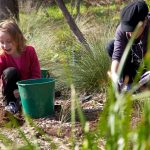
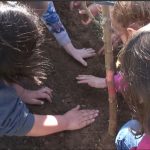
- Communicating clearly to park users the plans for staggered plantings, and the transformative processes currently taking place.
Commoning Concerns
Ownership
Local Government Authority.
Access
All public; birdlife.
Use
Better planning for tree replacement;
Benefit
Maintaining coolth in microclimates; amenity of public space;
Care
Local Government Authority; contracted arboriculturists; community volunteers.
Note
We can also improve passive maintenance of vegetation through environmental manipulation and an understanding of ecological succession. In this way, non-human users are also enrolled into a commoning ecosystem.
References
- ABC. (2009). Making microclimates. Gardening Australia, Series 20 Episode 28, https://www.abc.net.au/gardening/factsheets/making-microclimates/9430180
- City of Ryde. (2016). Tree Management Plan – Draft, August 2106, http://www.ryde.nsw.gov.au/files/assets/public/publications/tree-management-plan.pdf?streamfile=true
No related patterns available.